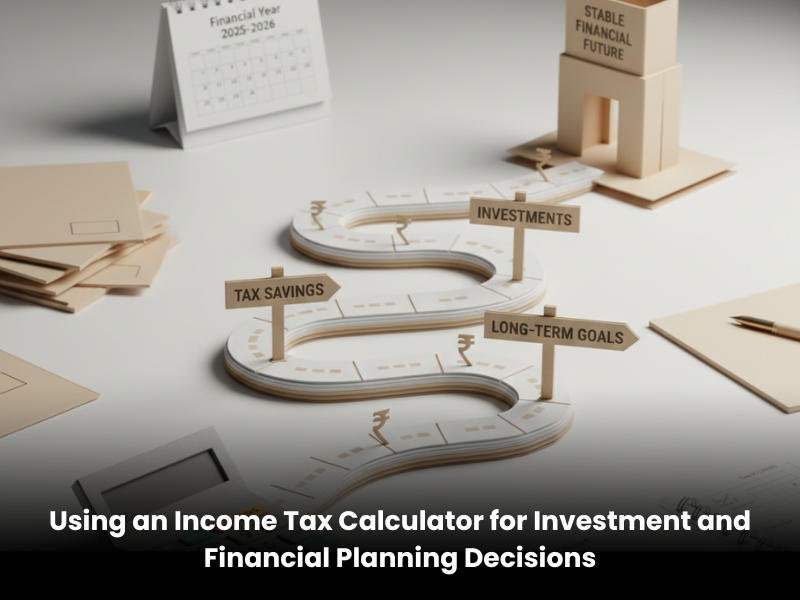
An income tax calculator is commonly used to estimate tax payable for a financial year. However, when used early and thoughtfully, it can also serve as a practical planning tool. It helps individuals understand how income, deductions, and investments interact, and how much surplus is realistically available for savings and long-term goals.
For salaried professionals, business owners, and self-employed individuals, the value of such a calculator lies in clarity and predictability, not just compliance.
What an Income Tax Calculator Does
An income tax calculator is an online tool that estimates tax liability based on:
- Income from various sources
- Eligible deductions and exemptions
- Choice between the old and new tax regimes
Most calculators allow a comparison of both regimes, enabling taxpayers to assess which option results in a lower tax outgo based on their specific income and deduction profile.
The output is indicative, but it provides a structured view of how different financial inputs affect taxable income and tax payable.
How It Supports Better Financial Planning
1. Clear view of post-tax income
A calculator helps quantify how much income remains after tax. This is essential for realistic budgeting, determining monthly investible surplus, and avoiding over-commitment to investments that strain cash flow.
2. Informed use of deductions and investments
By entering deductions, taxpayers can see the impact of various instruments, including:
- Life and term insurance premiums
- Provident fund contributions
- Equity Linked Savings Schemes
- National Pension System contributions
- Home loan principal repayment
- Eligible tuition fees and other Section 80C items
Seeing the tax impact in one place reduces the tendency to make hurried, year-end investments solely for tax saving, without considering liquidity or long-term suitability.
3. Old versus new tax regime evaluation
With changes in tax slabs and rebate thresholds, the choice between the old and new regimes has become more nuanced. A calculator allows taxpayers to test both regimes using the same income and investment data, helping them choose based on actual outcomes rather than assumptions.
This is particularly useful where income levels or deduction patterns change during the year.
4. Better alignment of insurance and risk planning
Tax calculators also reflect the tax treatment of term insurance and health insurance premiums. This helps position insurance as a core risk management tool, with tax benefits as a secondary advantage, rather than treating insurance purchases purely as tax-saving exercises.
How to Use an Income Tax Calculator Effectively
Most calculators follow a simple, structured process.
Step 1: Enter basic details
Provide information such as age category, residential status, income sources, and the applicable tax regime. Where available, review both regimes to understand comparative outcomes.
Step 2: Input deductions and exemptions
Enter amounts for eligible deductions, including:
- Section 80C investments and payments
- Employee and voluntary provident fund contributions
- NPS contributions under Section 80CCD
- Health insurance premiums under Section 80D
- Donations under Section 80G
- Home loan principal repayment, where applicable
Accurate inputs are important. Overstating deductions can lead to unrealistic planning assumptions.
Step 3: Review tax liability
The calculator will show taxable income, total deductions, and estimated tax payable. Use this to assess:
- Whether current investments are adequate or excessive
- How much surplus can be allocated to long-term goals
- Whether changes in contribution levels improve outcomes
Some tools also indicate monthly tax impact, which is useful for salary structuring and cash flow planning.
What an Income Tax Calculator Does Not Do
An income tax calculator is a planning aid, not a substitute for professional advice. It does not:
- Address complex income structures or one-off transactions
- Interpret evolving legal positions or litigation risk
- Replace personalised advice on asset allocation or estate planning
Its role is to provide direction and clarity, not final answers.
Practical Takeaways
- Use the calculator early in the financial year, not only at filing time
- Update inputs when income or investment patterns change
- Treat tax efficiency as a by-product of sound financial planning
- Review outcomes periodically to stay aligned with applicable tax laws
Closing Note
When used correctly, an income tax calculator supports informed financial decisions by linking income, tax, investments, and long-term goals in a single framework. It helps taxpayers plan with discipline, avoid reactive decisions, and maintain clarity over their financial position.
Tax exemptions and deductions are subject to applicable tax laws and notifications in force from time to time. Any planning should be reviewed periodically to reflect current regulations and individual circumstances.