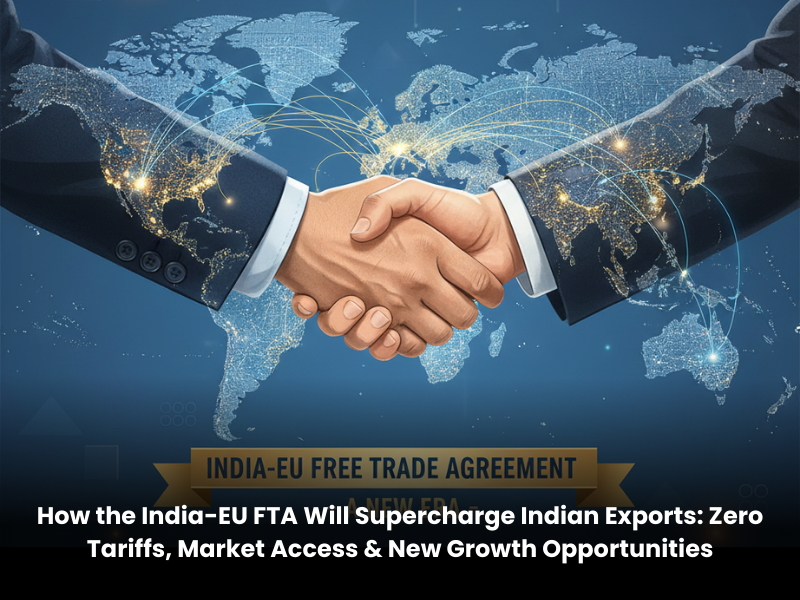
On January 27, 2026, India and the European Union (EU) successfully concluded negotiations on a landmark Free Trade Agreement (FTA) – being hailed as the “Mother of All Trade Deals” for India. This historic pact dramatically alters how India trades with one of the world’s wealthiest economic blocs by eliminating tariffs on key export products and opening new doors for Indian businesses and workers.
🚢 Why This Deal Matters
The India-EU FTA brings two major economic powers closer:
- India: The world’s fastest-growing large economy, known for competitive manufacturing and services.
- European Union: A bloc of 27 countries, ranking among India’s largest export destinations.
Together, they account for about 25% of global GDP and nearly one-third of world trade – making this trade pact one of the most consequential in decades.
📈 Major Benefits for Indian Exports
✅ Zero Tariffs for Key Sectors
Under the FTA, India will secure zero-tariff access to EU markets on a large share of its exports. This means Indian goods can enter the EU without customs duties, making them cheaper and more competitive.
Sectors that stand to benefit most include:
- Gems & Jewellery – India is a global leader, and duty-free access boosts competitiveness in Europe.
- Plastics & Rubber Products – Zero duties open up significant export potential.
- Textiles & Apparel – A labor-intensive industry that can gain major market share.
- Leather, Footwear & Handicrafts – Enhanced access for traditional Indian export champions.
- Marine Products & Engineering Goods – Higher demand expected from European importers.
These sectors collectively represent tens of billions of dollars in annual trade and are critical for job creation, especially for artisans, MSMEs (micro, small and medium enterprises), and skilled workers across India.
🌍 Greater Market Access & Value-Chain Integration
The agreement goes beyond tariffs. It also includes:
- Trade Facilitation Improvements – Simplified customs procedures and rules of origin make doing business easier.
- Services & Mobility Provisions – Easier movement for skilled professionals and broader services trade gains.
- New Opportunities in Digital & Emerging Industries – The deal covers modern trade disciplines like digital commerce, supporting Indian tech growth.
These changes can help Indian firms integrate more deeply into global value chains, reinforcing India as a dependable supplier for international markets.
📉 Tariff Reductions From the EU Side
The EU, in turn, will phase out tariffs on more than 96% of tariff lines, significantly lowering the cost of European goods entering India. This enhances choices for Indian consumers and companies relying on imports in sectors such as machinery, chemicals, and intermediate goods.
🏭 New Roads for Jobs and Competitiveness
This trade deal aligns with India’s larger economic goals:
- Boosting employment: Tariff cuts can stimulate manufacturing and export-oriented jobs, especially in labor-intensive sectors.
- Supporting MSMEs and artisans: Better access to EU markets means new customers for small Indian exporters.
- Enhancing innovation: Increased competition and cooperation with EU firms may accelerate technology adoption in India.
🛡️ Protecting Sensitive Sectors
India has also protected key domestic interests by limiting tariff cuts in certain sensitive areas, including:
- Dairy products
- Certain cereals and poultry
- Selected fruits and vegetables
This ensures that while export-oriented sectors gain, vulnerable domestic producers are shielded from abrupt competition.
📊 Looking Ahead
Once implemented, the India-EU FTA is expected to:
- Boost bilateral trade volumes substantially
- Attract foreign investment into Indian industries
- Bolster India’s role in global trade networks
By combining tariff elimination with broader cooperation in services, standards, and digital trade, the deal marks a strategic shift in India’s trade policy – expanding its footprint in one of the richest consumer markets while advancing long-term economic growth and competitiveness.
🧠 Conclusion
The India-EU Free Trade Agreement is more than a tariff reduction pact – it’s a comprehensive framework designed to unlock new opportunities for exporters, strengthen global value-chain participation, and foster long-term economic growth. With zero duties on key segments like gems, jewellery, plastics, textiles, and more, Indian businesses now have a powerful platform to expand into European markets and create jobs at home.