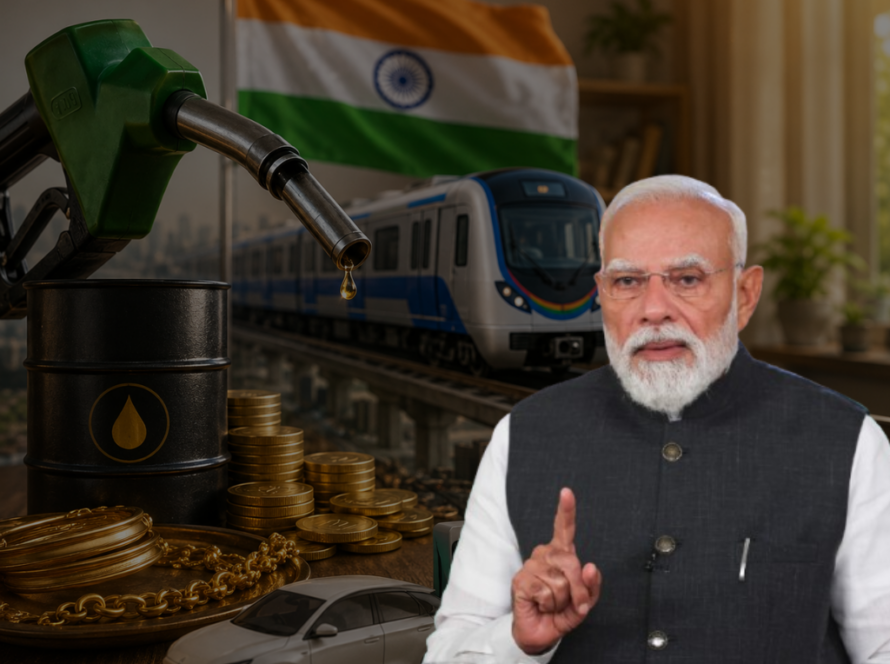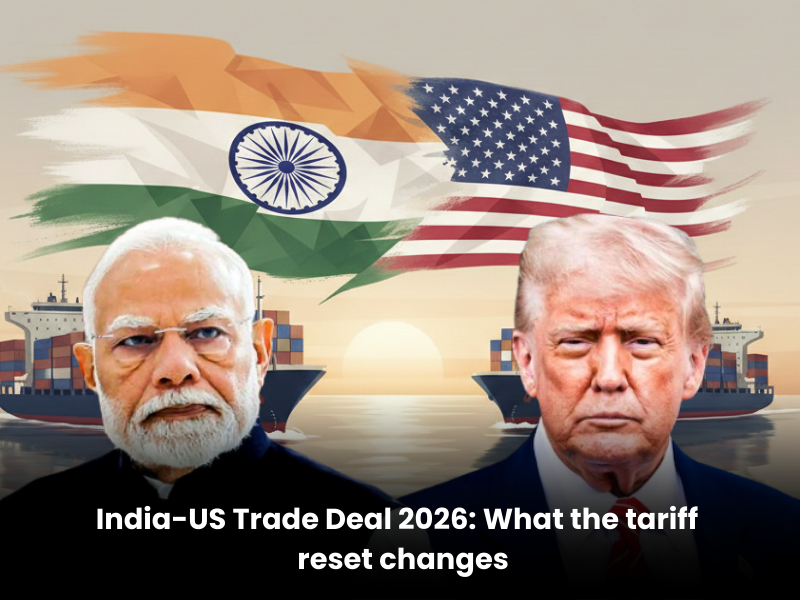
The new India–US trade agreement does more than cut duties. It resets how the two countries engage on market access, energy sourcing and supply chains.
The deal ends a year of tariff escalation and links trade concessions to broader geopolitical negotiations.
How the tariff cycle turned
The reset follows a sharp escalation that began in 2025:
- April 2025: The US imposes a 26% “reciprocal tariff” on select Indian goods
- July 2025: Tariffs on all Indian goods raised to 25%, with penalties linked to Russian oil purchases
- August 2025: Duties raised to 50%, the highest applied by the US to any major trading partner
- February 2026: Tariffs cut from 50% to 18% after a call between Donald Trump and Narendra Modi
At 18%, India’s tariff rate is now below Vietnam (20%), Bangladesh (20%), Indonesia (19%) and far below China (34%).
What has been confirmed
India has confirmed the trade agreement with the US. However, the full scope of energy and geopolitical conditions cited by US President Donald Trump has not been officially confirmed by New Delhi.
What the US has said
Trump has outlined three commitments that he says India has agreed to:
- A halt to purchases of Russian oil
- Lower tariff and non-tariff barriers on US goods, with a stated aim of moving towards zero
- Higher imports of US energy, including oil, gas and coal
Trump said India would “buy American at a much higher level,” across energy, agriculture, technology and industrial goods, and that the value could exceed $500 billion.
What India gains
Export competitiveness
An 18% tariff improves price competitiveness in the US market. Textiles, engineering goods, electronics and auto components are likely to benefit.
Market access
The cut removes a barrier that had limited India’s presence in the world’s largest consumer market.
Energy diversification
Higher US crude and LNG imports could reduce dependence on a single source and add flexibility to India’s energy basket.
Policy space
Lower external pressure gives room to pursue domestic reforms in manufacturing, logistics, customs and compliance systems.
Trade positioning
India now sits in the lower-tariff group alongside the UK (10%), EU (15%), Japan (15%) and South Korea (15%).
What changes for Indian businesses
Supply-chain restructuring
Lower duties may prompt exporters to expand US-facing capacity and reassess sourcing and origin strategies.
Compliance and documentation
If zero-tariff channels are introduced, firms will need accurate classification, origin tracking and customs documentation to claim benefits.
Sector impact
- Export-linked MSMEs: improved margins and price competitiveness
- Energy-intensive industries: improved supply security
- Agricultural exporters: potential access if India adjusts its own import barriers
Geopolitical risk
Because the deal is linked to energy policy, shifts in global politics could affect future conditions. Companies will need to track regulatory and trade developments closely.
Assessment
This is not a short-term tariff concession. It changes how India approaches exports, energy sourcing and trade partnerships.
The move from 50% to 18% marks a shift away from escalation. The emphasis is now on supply chains, compliance systems and long-term market access rather than episodic tariff negotiations.
For Indian businesses, the next phase will depend on pricing discipline, compliance readiness and cross-border tax planning.