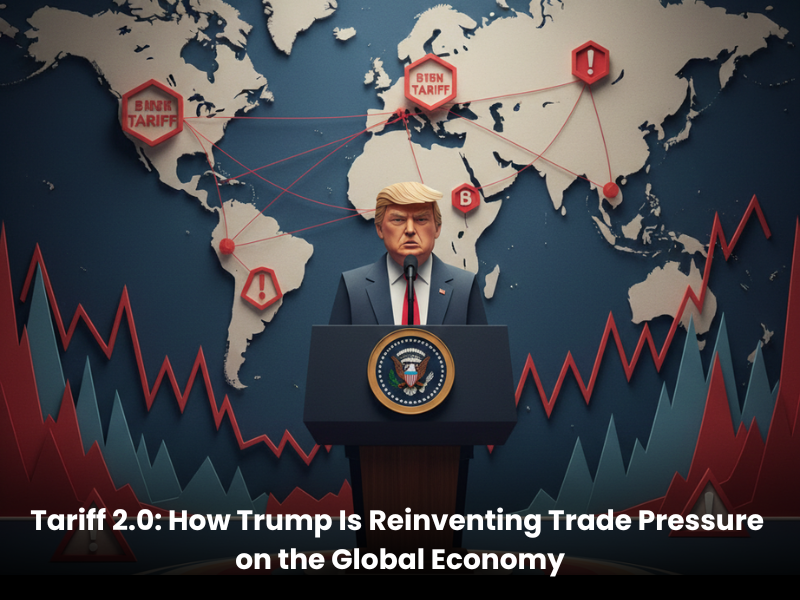
In a dramatic twist on global trade policy, Donald Trump has launched a new tariff strategy that could reshape the world’s economic landscape. After the U.S. Supreme Court delivered a setback to his earlier tariff program, Trump responded swiftly with an alternative – a move that markets and governments around the world are watching closely.
The Supreme Court Blow That Changed the Game
On February 20, 2026, the U.S. Supreme Court ruled that Trump’s previous global tariff program – imposed under emergency powers – was unconstitutional because the president exceeded the authority granted by Congress. This decision invalidated many of the sweeping tariffs that had been implemented, sending shockwaves across global markets.
Facing this legal obstacle, Trump didn’t abandon his trade agenda. Instead, he pivoted to a different legal framework to continue applying pressure on U.S. trading partners.
The New 10% Global Tariff
Within hours of the court ruling, President Trump signed an executive order imposing a 10% global tariff on most imported goods under Section 122 of the Trade Act of 1974. The tariff is scheduled to last for 150 days, unless Congress votes to extend it.
Unlike the previous tariff regime, this new tariff applies across the board – affecting imports from all countries – but it is also temporary and legally constrained. Some critical items, such as key minerals, pharmaceuticals, and certain electronics, are exempted, and goods already subject to existing tariffs under other sections are handled differently.
Trump made it clear that this measure is part of a broader strategy aimed at addressing ongoing trade imbalances and what he perceives as unfair trade practices by other nations.
Alternative Legal Pathways
The president’s shift isn’t limited to Section 122. The administration is also exploring the use of other trade law provisions to strengthen longer-term tariff policy:
- Section 301: Enables targeted tariffs in response to unfair trade practices after formal investigations.
- Section 232: Allows tariffs on imports considered threats to national security.
These tools require more rigorous legal and administrative procedures than the emergency powers previously invoked – but they offer a tougher legal footing that could withstand future challenges.
What This Means for the Global Economy
Continued Trade Tension
Even though the United States Supreme Court struck down the initial tariff program, Trump’s new strategy keeps pressure on global trade partners. Analysts warn that this could prolong uncertainty in international markets and strain diplomatic ties with key economies based on how tariffs are applied.
Impact on U.S. Citizens and Importers
Tariffs tend to elevate the cost of imported goods a burden that often gets passed on to consumers. The temporary nature of the new tariff might provide short–term revenue for the U.S. Treasury, but it also risks increasing prices on everyday products.
Mixed Signals for Trade Agreements
Countries like China, the European Union, Canada, and India now find themselves navigating new uncertainty. While some tariffs were reduced from earlier high levels, the future direction of trade deals remains unclear. Negotiations could be revisited as countries reassess their relationships with the U.S. in light of evolving tariff policy.
Final Takeaway
Trump’s “Tariff 2.0” isn’t just a temporary fix it’s a creative reboot of America’s trade toolkit. By shifting from unfettered emergency powers to more structured and legally grounded authorities, the administration is signaling that trade pressure remains a central pillar of U.S. economic strategy.
While global markets and foreign governments digest the implications, one thing is clear: trade policy isn’t going back to what it was. Whether this new approach leads to fairer trade or deeper conflict depends on how it is implemented – and how the world responds.