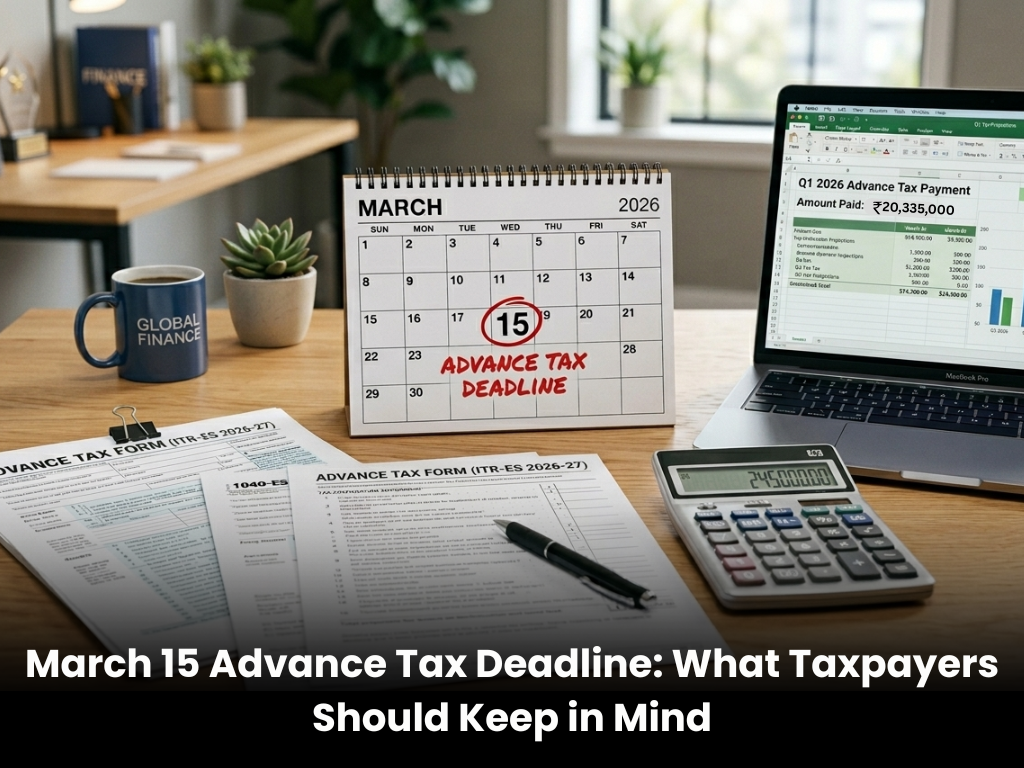
As the financial year approaches its final weeks, many taxpayers find themselves reviewing income, checking deductions and making sure their tax payments are in order. Around this time, one date quietly becomes important – March 15, the deadline for the final instalment of advance tax.
Advance tax simply means paying income tax during the year instead of waiting until the return is filed. Rather than settling the entire liability in one go, taxpayers pay portions of the expected tax in stages across the financial year.
For people whose income goes beyond a fixed salary, this deadline usually carries more significance.
Who Typically Needs to Pay Advance Tax
Advance tax rules apply when the total tax payable for the year exceeds ₹10,000, after adjusting TDS and available credits.
In practice, this often includes:
• Freelancers and independent consultants
• Self-employed professionals such as doctors, architects or lawyers
• Business owners and partnership firms
• Individuals earning income from capital gains, rent or other sources
Employees whose tax is fully covered through salary TDS generally do not need to worry about advance tax. But things change if there is additional income — for example, from investments, trading or rental property.
One group that usually does not fall under advance tax rules is senior citizens above 60 years of age who do not run a business or profession.
How the Advance Tax Instalments Work
Instead of paying everything at the end of the year, the tax system spreads payments across four stages.
The schedule looks like this:
• June 15, 2025 – at least 15% of the estimated tax
• September 15, 2025 – at least 45% of the estimated tax
• December 15, 2025 – at least 75% of the estimated tax
• March 15, 2026 – 100% of the estimated tax
By March 15, the expectation is that the full advance tax amount for the financial year has been paid.
There is a simpler route for certain small businesses that opt for the presumptive taxation scheme. Instead of four instalments, they are allowed to pay the entire advance tax in one payment by March 15.
What Happens If the March 15 Payment Is Missed
Missing the March instalment does not lead to a penalty immediately. But the law does impose interest for delayed or insufficient payments.
If the advance tax paid during the year falls short of the required amount, interest may be charged at 1% per month on the outstanding tax.
This interest continues to accumulate until the tax liability is cleared. Over time, even a small unpaid balance can grow into a noticeable amount.
Can the Tax Still Be Paid After March 15
Yes. Taxpayers who realise they have missed the instalment still have a brief opportunity to correct it.
The remaining advance tax can be paid any time before March 31, which marks the end of the financial year.
However, two interest provisions may apply in such situations:
• Section 234C – for shortfall in advance tax instalments
• Section 234B – if the total advance tax and self-assessment tax paid by March 31 is less than 90% of the final assessed tax
Under Section 234B, interest is also charged at 1% per month on the unpaid portion of the tax.
In simple terms, the longer the payment is delayed or underestimated, the more the interest adds up.
Why Advance Tax Should Not Be Ignored
Advance tax is sometimes treated as a routine compliance task. In reality, it serves a practical financial purpose.
Paying tax gradually throughout the year helps avoid a large lump-sum payment later. It also reduces the likelihood of interest charges and last-minute pressure near the return filing period.
For professionals and businesses with fluctuating income, periodically reviewing expected earnings and adjusting advance tax payments can make the process far easier.
A Small Habit That Prevents Bigger Problems
Tax deadlines rarely cause stress when planning happens earlier in the year.
Keeping track of income, estimating tax liability realistically and making instalment payments on time usually keep everything manageable.
Seen this way, the March 15 advance tax deadline is less about urgency and more about discipline. When handled on time, it simply becomes another routine step in closing the financial year smoothly.