
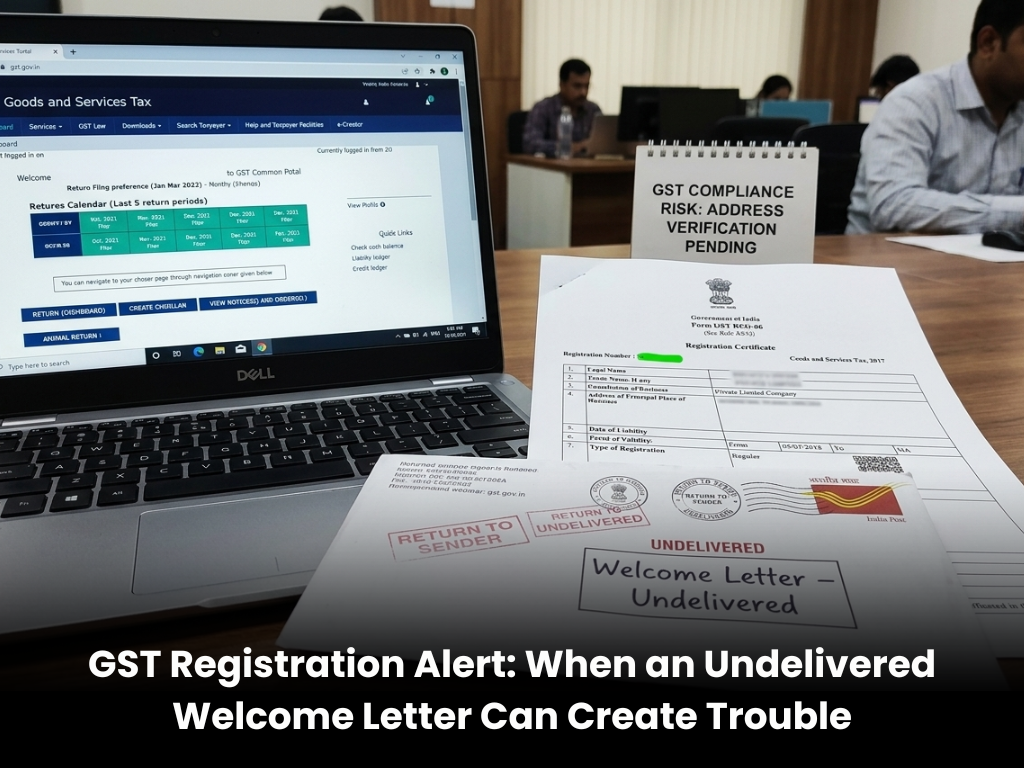
For many businesses, the moment a GST number is issued feels like the final step in the registration process. Once the certificate arrives, most entrepreneurs assume everything is settled and they can move on to regular operations.
But there is a small follow-up step that often goes unnoticed.
After a GST registration is approved, the tax department sends a physical welcome letter, sometimes referred to as a welcome kit, to the business address mentioned in the application. The letter usually arrives through India Post and, at first glance, it may seem like a routine formality.
However, if this letter is returned undelivered, it can sometimes trigger unexpected problems for the business.
In certain cases, GST authorities may even suspend the registration until the matter is clarified.
Why the GST Department Sends a Welcome Letter
Over the past few years, the GST registration process has become significantly faster.
Under Rule 14A of the CGST Rules, applicants who complete PAN and Aadhaar authentication can receive GST registration very quickly. In some cases, the approval happens within hours.
While this speed makes it easier for genuine businesses to begin operations, it also increases the risk of fraudulent registrations being created using fake addresses or shell entities.
Because of this, the tax department performs additional verification steps after granting the registration.
Sending the welcome letter to the registered address is one such step. If the letter reaches the premises successfully, it indirectly confirms that the business exists at the declared location.
What Happens When the Letter Cannot Be Delivered
Problems start when the postal department is unable to deliver the welcome letter.
This situation is more common than many people realise. There can be several practical reasons behind it.
Sometimes the office premises may still be locked because the business has not yet started operating fully. In other situations, the company might be in the process of shifting to the location mentioned in the GST application.
Address details can also create complications. Missing building names, incomplete floor numbers, or unclear landmarks can make it difficult for postal staff to find the correct premises.
And of course, there are the usual delivery issues that occasionally occur with postal services.
When the letter returns undelivered, the GST system may interpret it as a possible sign that the business is not operating from the registered address.
At this point, tax authorities may initiate further verification.
Why Officials Treat This Seriously
From the perspective of the GST department, undelivered verification letters can indicate potential fake registrations.
Over the years, several cases have surfaced where fraudulent entities obtained GST numbers to generate fake invoices and claim input tax credit without conducting real business.
To prevent such misuse, authorities keep a close watch on newly issued GST registrations.
If the address verification fails, the department may issue a show-cause notice asking the taxpayer to explain why the registration should not be cancelled.
What the Law Says About Cancellation
The legal authority for cancelling GST registration comes from Section 29 of the CGST Act.
The law allows cancellation in situations such as:
• Registration obtained through fraud
• Wilful misstatement or suppression of facts
• Non-existent or non-operational businesses
Strictly speaking, the non-delivery of a welcome letter is not specifically mentioned as a ground for cancellation.
However, if officials suspect that the business may not exist at the declared address, they may initiate action using the provisions related to misrepresentation or non-existent entities.
This is why businesses are sometimes asked to prove that their operations are genuine.
Documents Businesses May Be Asked To Provide
When a show-cause notice is issued, the taxpayer usually has an opportunity to respond.
To demonstrate that the business is operating from the declared location, authorities may ask for supporting documents such as:
• Electricity bills for the premises
• Rent agreement or maintenance bills
• Photographs of the office or workplace
• Utility bills linked to the address
These documents help establish that the business actually functions from the registered premises.
How Suspension Can Affect Business Operations
If the GST registration is suspended during verification, it can disrupt normal business activity.
A suspended registration may prevent the business from:
• Issuing GST tax invoices
• Generating e-way bills
• Filing GST returns normally
• Carrying out certain supply transactions
For startups and small businesses, this interruption can quickly affect cash flow and supply chain operations.
Even if the issue is resolved later, the temporary disruption can create operational stress.
Why Genuine Businesses Sometimes Face This Problem
Interestingly, many cases of returned welcome letters involve genuine businesses rather than fraudulent ones.
The issue often arises because newly formed companies obtain GST registration before their office setup is fully complete.
If the postal delivery happens during that transition period, there may be nobody present at the location to receive the letter.
In other situations, small errors in address formatting can make it difficult for postal workers to identify the exact building or office.
Occasionally, delays within the postal system itself can also lead to the letter being returned.
Practical Steps Businesses Should Take
Businesses can reduce the chances of facing such issues by paying attention to a few simple details.
First, make sure the address mentioned in the GST application is accurate and complete. Including building name, office number, floor details and nearby landmarks can make deliveries easier.
Second, keep an eye on postal deliveries after receiving GST registration. Inform office staff or security personnel that official correspondence from the GST department may arrive.
Third, if postal deliveries are frequently missed in the area, businesses may consider coordinating with the local post office.
These small precautions can prevent unnecessary complications later.
What If the GST Registration Is Cancelled
Even if the registration is cancelled due to such issues, taxpayers are not left without options.
Under GST rules, a business can apply for revocation of cancellation within 90 days by filing Form GST REG-21.
In the application, the taxpayer must explain the situation and submit proof that the business is genuinely operating from the registered address.
If the explanation and documents satisfy the authorities, the GST registration can be restored.
A Small Detail That Can Avoid Bigger Problems
GST compliance usually brings to mind return filings, tax payments and invoice reporting.
But sometimes smaller administrative details matter just as much.
An undelivered letter might appear insignificant, yet it can trigger scrutiny if not handled properly.
For newly registered businesses especially, ensuring that the declared address is active, accessible and correctly documented can save time and avoid unnecessary disputes with the tax department.
In a system built around compliance, even small procedural steps can carry more importance than they initially seem.