
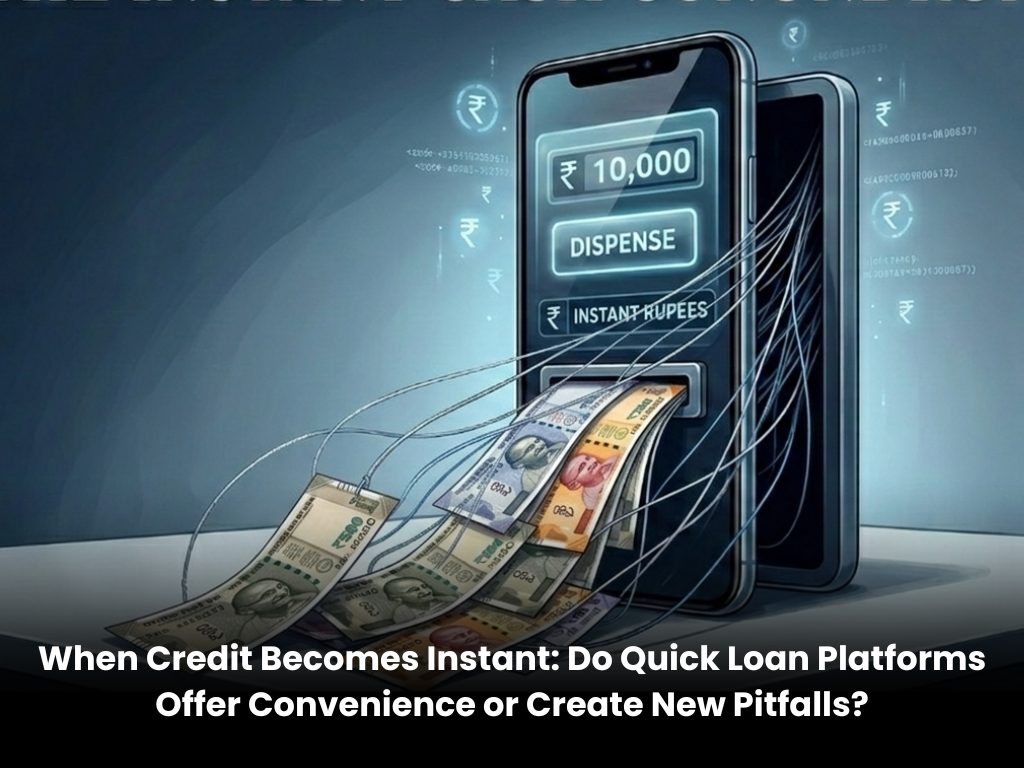
Digital payments have changed how people manage money in India. After getting used to groceries and meals arriving within minutes, many borrowers now expect the same speed from lenders, and the loan industry has adapted quickly.
Messages offering “instant credit” often appear as soon as someone checks their phone. Several apps promise approval in minutes and disbursal soon after. A process that once involved forms, documents and waiting periods is now completed through a short digital journey.
But when taking a loan starts to feel as easy as placing an online order, the real risks can slip past unnoticed. Faster access can certainly help in emergencies, yet it can also lead to rushed borrowing and higher overall costs.
The sections below outline what borrowers should look out for before using an instant loan app, the fees and conditions that often go unnoticed, and why a quick process should not override basic financial judgment.
Start by understanding what “pre-approved” really means
A message saying “You are pre-approved” does not guarantee a loan.
Most of these “pre-approved” offers are essentially promotional messages. The loan still depends on the final credit check. Borrowers should take a moment to confirm whether the lender is registered with the Reserve Bank of India or working with an RBI-regulated bank or NBFC.
This has become especially important because, in recent years, the regulator and police have taken action against several unregistered lending apps linked to aggressive recovery methods and misuse of personal information.
If the app or platform does not clearly state its regulated partner, treat it as a warning sign.
Do not equate speed with affordability
Quick approval does not mean the loan is cheap. Borrowers should review the full cost structure, fees, penalties and prepayment rules before signing up.
Processing and documentation charges can range from 1% to 3%. Some lenders deduct these upfront while calculating interest on the full sanctioned amount. This increases the effective cost of borrowing even when the headline rate looks reasonable.
Small EMIs often make short-term digital loans look simple to handle, but the overall cost can be far higher once convenience fees, GST and late-payment charges are added. These extras can push up the Annual Percentage Rate (APR) far beyond what the headline interest rate suggests.
What matters for borrowers is the APR and the total amount they will repay over the entire tenure, not just the EMI that appears affordable at first glance.
Under the digital lending rules introduced by the Reserve Bank of India in 2022, regulated lenders must share a Key Fact Statement before disbursal. This document lays out every cost clearly, and reviewing it carefully is essential before accepting any instant loan. Absence of clear disclosure should be treated with caution.
Hidden costs that often escape attention
Instant digital loans emphasise speed and simplicity, but the price for convenience can be steep.
- Fees deducted at disbursal mean borrowers receive less money than they repay.
- Interest may be calculated on the sanctioned amount, not the net amount received.
- Penalties for delays are often higher than traditional personal loans.
- Shorter tenures raise the effective annual cost even when interest rates appear modest.
Many borrowers overlook these elements while focusing on quick access to funds. A careful reading of the charge sheet can prevent unpleasant surprises later.
How borrowers fall into debt cycles
Debt traps rarely begin with large loans. They usually start with small, short-term borrowing made on impulse.
A few common patterns stand out:
Rollover cycles
Borrowers take a new loan to close an old one, increasing costs and repayment pressure.
Multiple app borrowing
Disbursements from different apps accumulate into a heavy monthly burden.
Over-borrowing
Easy access leads some users to take more credit than their monthly cash flow can support.
Regulated lenders report to credit bureaus such as TransUnion, CIBIL, so even minor delays can lower credit scores and affect eligibility for home, auto or business loans.
Some apps also request access to contacts, photos or SMS data beyond what is needed for underwriting. Such permissions pose privacy risks and should be avoided.
Assess repayment capacity before tapping instant credit
Borrowers should treat instant loans as seriously as traditional credit.
The key is to align the loan tenure with monthly cash flows and ensure the instalments remain manageable without disrupting essential expenses.
A pre-approved offer should never be treated as a signal to borrow. It is simply an invitation to evaluate, compare and decide objectively.
A simple habit that protects borrowers
Before accepting any instant loan:
- Check whether the lender or partner NBFC is RBI-regulated.
- Review the Key Fact Statement and confirm the APR.
- Verify all fees, including late-payment and prepayment charges.
- Avoid apps seeking unnecessary access to personal data.
- Borrow only within your repayment capacity.
Instant credit can be beneficial when used prudently.
The danger lies not in the speed of approval, but in the lack of scrutiny. A few minutes of careful evaluation can prevent years of repayment stress.