
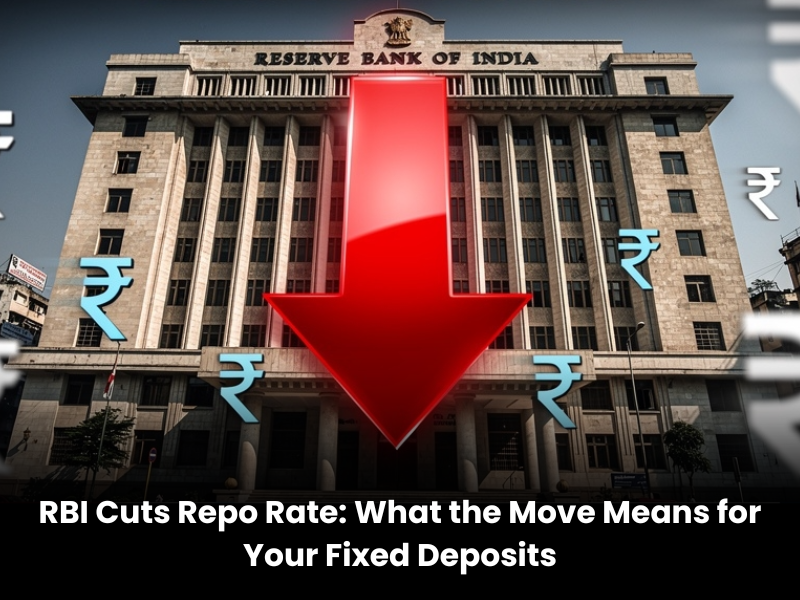
The Reserve Bank of India (RBI) has reduced the repo rate by 25 basis points to 5.25 percent, marking the fourth rate cut since February. While the move is aimed at supporting economic activity, it has direct implications for depositors, particularly those who depend on fixed deposits (FDs) for steady income.
How the rate cut affects depositors
A lower repo rate generally leads to banks reducing their lending and deposit rates. The impact on FD rates will not be immediate, but a downward adjustment is expected in the coming weeks, especially for short- and medium-term deposits.
Several banks have already trimmed their FD rates since the first rate cut earlier this year, with reductions between 50 and 100 basis points across different maturities.
Why banks may cut FD rates
The repo rate influences the cost at which banks borrow from the RBI. A reduction eases borrowing costs, prompting banks to adjust interest rates on both loans and deposits. As lending activity becomes cheaper, banks typically lower deposit rates to maintain their cost structure and transmission of monetary policy.
What depositors should consider now
With interest rates likely to soften further, depositors may need to revisit their investment approach:
1. Use FD laddering
Distribute your deposits across multiple tenures instead of locking everything at one rate. This helps balance returns, maintain liquidity, and reduce reinvestment risk if rates decline further.
2. Review maturity buckets
Shorter-term FDs may see quicker reductions. Those who prefer certainty could explore slightly longer maturities before rates move further down.
3. Senior citizens should lock in stability
Since senior citizens earn an additional 25–50 basis points, opting for longer tenures can help secure today’s rates for an extended period.
4. Consider alternatives to traditional FDs
Investors comfortable with marginally higher risk may evaluate corporate FDs, debt mutual funds, or government securities. These products may offer better yields, but suitability depends on individual risk tolerance and investment goals.
Why this matters
FDs remain a preferred option for risk-averse savers, retirees and households seeking predictable returns. With the interest-rate cycle turning softer, proactive planning becomes crucial to preserve income and maintain financial stability. A diversified fixed-income strategy can help depositors adapt smoothly to the changing rate environment.