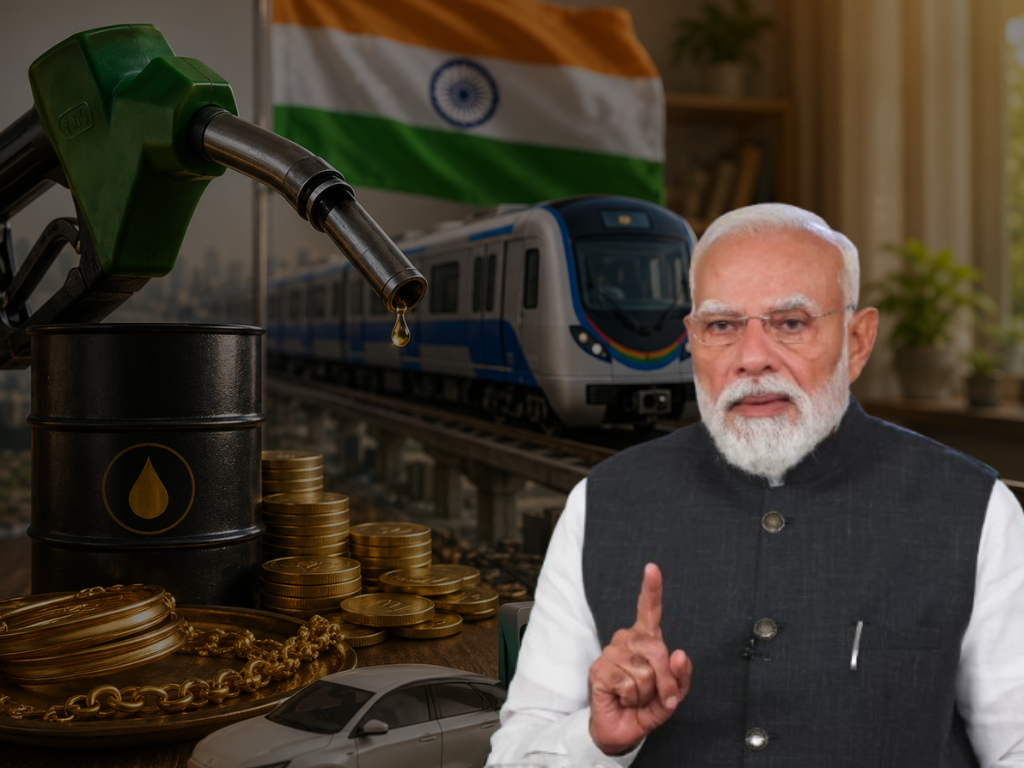
Prime Minister Narendra Modi recently urged citizens and businesses to reduce unnecessary energy consumption as global crude oil prices continue to remain volatile amid geopolitical tensions in West Asia.
The suggestions included:
- reducing unnecessary fuel consumption
- using public transport and carpooling
- encouraging work-from-home where practical
- limiting non-essential foreign travel
- accelerating adoption of electric vehicles
While these are not policy measures, they reflect a broader economic concern around rising energy costs and India’s dependence on imported crude oil.
For businesses, the larger issue is not the advisory itself, but the cost environment it points towards.
Why oil prices matter beyond fuel bills
India imports a significant portion of its crude oil requirements. When global oil prices rise sharply or remain elevated for long periods, the impact moves well beyond petrol and diesel prices.
Higher fuel costs gradually flow into:
- transportation and logistics
- manufacturing and distribution
- business travel
- procurement and warehousing
- overall operating expenses
For many businesses, especially those dependent on physical supply chains, fuel becomes an indirect cost embedded across operations.
Where the pressure shows up first
The earliest impact is usually visible in logistics and distribution.
Higher diesel prices increase trucking and freight costs, which then affect:
- movement of raw materials
- inter-state distribution
- last-mile delivery expenses
- inventory carrying costs
Sectors such as manufacturing, FMCG, retail, e-commerce and logistics tend to feel this pressure relatively quickly because transportation forms a meaningful part of their operating structure.
Businesses operating on fixed-price contracts or thin margins may find it harder to immediately pass on these increases to customers.
What this means from a GST and working capital perspective
The GST framework itself has not changed. However, rising operating costs can still affect tax outflows indirectly.
In many transactions, freight and transportation costs form part of the taxable value reflected in invoices. As logistics expenses increase, the overall invoice value may also rise, resulting in a higher GST amount in absolute terms.
For businesses with large supply chains, this can affect:
- monthly GST outflows
- working capital planning
- timing of input tax credit recovery
- vendor pricing and reconciliation cycles
The impact is operational rather than regulatory, but it becomes relevant when cost pressures persist over multiple months.
Businesses may need to reassess cost structures
Periods of prolonged oil volatility often force businesses to review areas that are otherwise treated as stable operating expenses.
This may include:
- route and warehouse optimisation
- hybrid work models where feasible
- procurement planning
- vendor renegotiation
- inventory and distribution strategy
For some businesses, the objective is not necessarily cost reduction, but cost predictability.
Impact on imports and pricing
Import-heavy sectors may also face indirect currency-related pressure if higher oil imports widen trade deficits and weaken the rupee over time.
This can increase:
- landed cost of imports
- raw material expenses
- pricing pressure in competitive sectors
Companies dependent on imported inputs may therefore face both logistics inflation and currency-related cost increases simultaneously.
A broader economic signal
The Prime Minister’s remarks appear less like a short-term public advisory and more like an acknowledgment that energy volatility is becoming a structural business risk.
For businesses, the takeaway is straightforward:
fuel costs can no longer be treated as an isolated operational expense. They influence supply chains, pricing decisions, working capital cycles and long-term planning.
Companies that build flexibility into these areas are generally better positioned to manage periods of sustained cost volatility.
Closing perspective
Rising crude oil prices do not automatically change tax structures or compliance requirements. But they do change the cost environment businesses operate in.
Over time, even moderate increases in fuel and logistics expenses can influence margins, cash flow and pricing decisions across sectors.
For businesses, the focus now is less about reacting to short-term volatility and more about building operational resilience in an environment where energy costs remain uncertain.