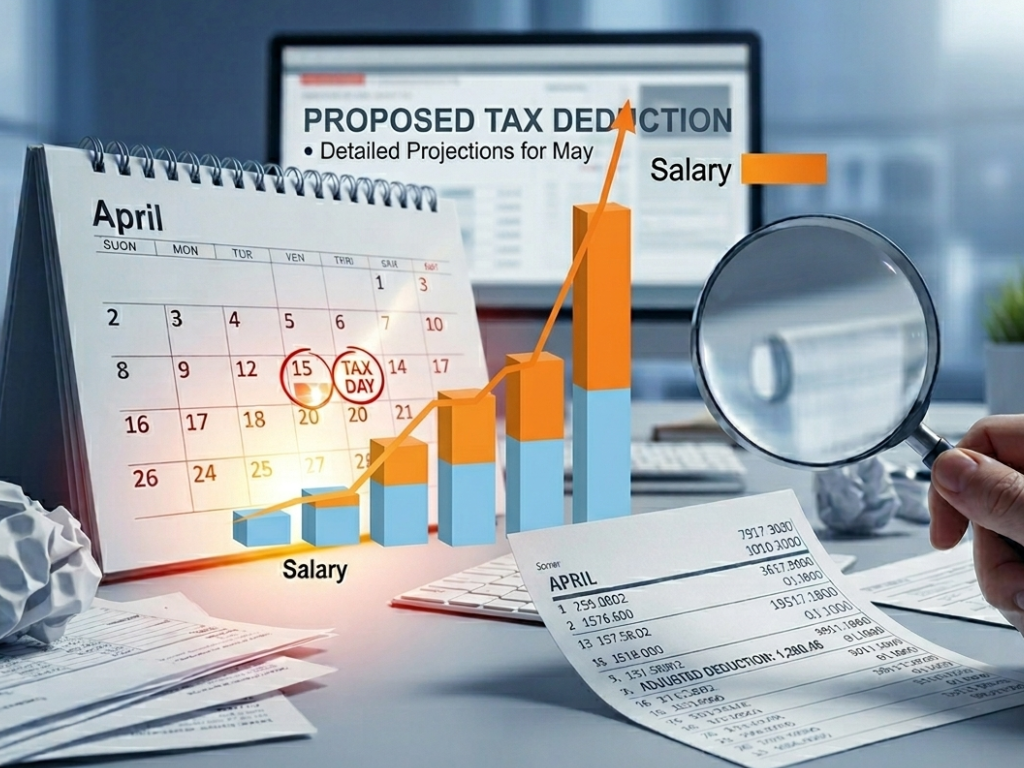
Many salaried employees notice an unexpected drop in their take-home salary in April despite receiving the same gross salary as before. This situation is largely linked to how employers calculate Tax Deducted at Source (TDS) at the beginning of a new financial year.
When the financial year resets in April, payroll systems reassess an employee’s projected annual income and recompute tax liability for the full year. The calculated tax is then distributed across monthly salaries, which often results in higher TDS deductions from April onwards.
This adjustment can create the impression that salary has reduced, even though the change is purely related to tax deduction methodology rather than actual compensation.
Why This Happens Frequently After Job Changes
The situation becomes more visible among employees who switched jobs during the previous financial year.
When an employee joins a new company in the middle or towards the end of a financial year, the employer may initially calculate TDS only on the salary payable for the remaining months of that year. If details of income earned from the previous employer are not disclosed immediately, the payroll system may not factor them into tax calculations.
As a result, tax deductions during those months remain relatively lower, leading to a temporarily higher take-home salary.
However, once the new financial year begins in April, the employer estimates the employee’s income for the entire twelve months and recalculates the total tax liability. Monthly TDS deductions are then adjusted accordingly, which reduces the in-hand salary even though the gross pay remains unchanged.
Other Payroll Factors That Increase April TDS
Apart from job changes, several routine payroll factors can also contribute to higher tax deductions in April.
One of the most common reasons is the non-submission of investment declarations at the start of the financial year. When employees fail to declare tax-saving investments, payroll systems assume that no deductions under eligible sections will be claimed, leading to higher default TDS deductions.
Employers may also include projected bonuses or variable pay while estimating annual income, which increases the calculated tax liability for the year.
Additionally, many organisations now apply the new tax regime as the default option unless employees explicitly opt for the old regime. This automatic selection may also influence the amount of tax deducted from monthly salary.
How Employees Can Ensure Accurate Tax Deduction
Employees who change jobs during the financial year should ideally disclose income from their previous employer to the new organisation. This is typically done through Form 12B along with supporting documents such as Form 16, salary slips, or tax statements like Form 26AS or AIS.
Providing this information allows payroll teams to calculate the correct tax liability and distribute deductions more accurately across the remaining months of the year.
If the previous employer’s income is not disclosed during payroll processing, the employee can still report it while filing the income tax return. However, this may result in additional tax payable along with applicable interest if taxes were under-deducted earlier.
Why This Matters for Taxpayers and Salaried Individuals
For people who get a salary the change in Tax Deducted at Source in April can be confusing. It seems like a mistake with the payroll. It is really just a normal change to figure out the tax for the whole year.
If people who get a salary understand how Tax Deducted at Source works they can plan their money better. They will not be confused when their take home salary changes.
It is very important that people tell the truth about the money they made from their job and that they send in their investment papers on time. If they do not do this they might have to pay tax at the end of the year when they file their tax return.
Key Takeaway
If someone’s take home salary goes down suddenly in April it is usually because of the change in Tax Deducted at Source for the year. It does not mean their salary has changed.
The more money that is taken out for tax means the employer thinks the person will make money that year and will have to pay more tax.
If people check their payroll papers early and make sure they tell the truth about all their money they can make sure their tax is taken out in a way that makes sense and they will not have surprises during the year, with Tax Deducted at Source and their salary.