Introduction
Every year, millions of pensioners across India face one small but essential formality: proving they are still alive to keep their pension flowing. This annual proof is called the Life Certificate, or Jeevan Pramaan Patra. Without it, pension disbursing authorities are required to pause payments until the certificate is submitted. For 2026, the process has become almost entirely digital, and understanding how it works can save pensioners — especially senior citizens — a great deal of time and hassle.
What Is a Life Certificate?
A pension is payable only for as long as the pensioner is alive. The pension disbursing authority — typically a bank branch, but sometimes a treasury, the Central Pension Accounting Office (CPAO), EPFO, or a defence pension office — must confirm once a year that the person receiving the pension is still living. That confirmation is the life certificate.
It can be submitted in two ways:
- Physical certificate: A paper form signed by a designated authority (a gazetted officer, bank manager, or similar) confirming the pensioner is alive.
- Digital Life Certificate (DLC): An electronic certificate generated through the government’s Jeevan Pramaan platform using Aadhaar-based authentication.
A Digital Life Certificate carries a unique Pramaan ID, is stored in a central Life Certificate Repository, and can be accessed electronically by the pension disbursing agency — removing the need for the pensioner to visit an office in person.
What’s New in 2026
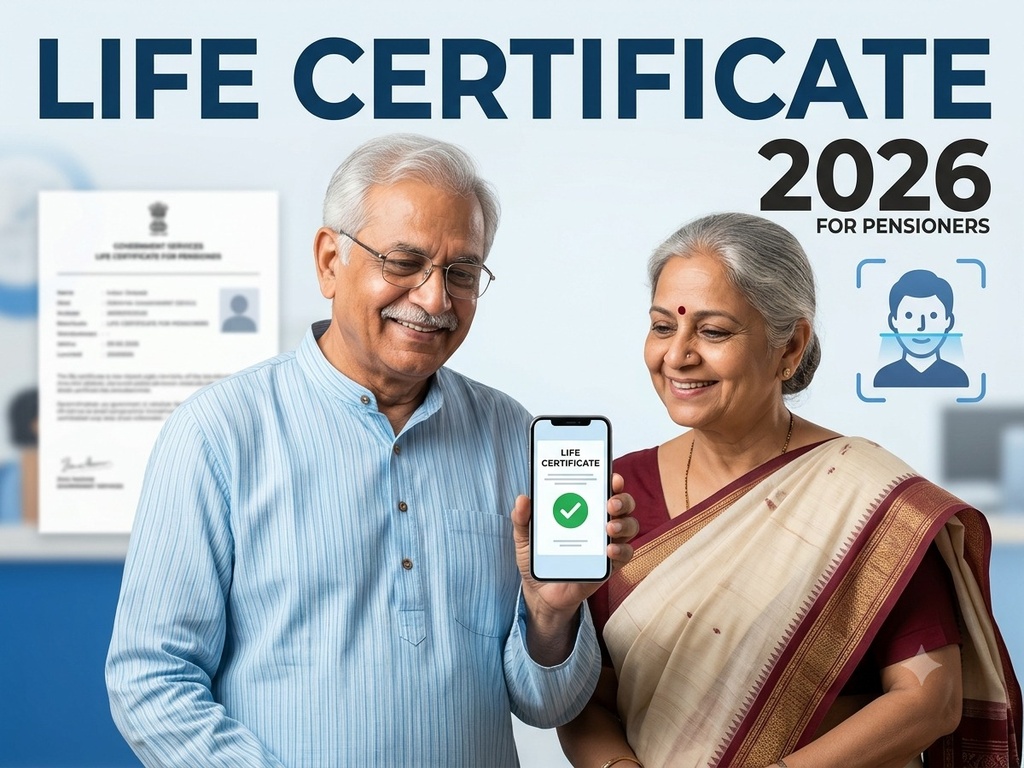
Face Authentication technology for Digital Life Certificates is not new — it was launched by the Department of Pension & Pensioners’ Welfare (DoPPW) on 29 November 2021, giving pensioners a way to generate their DLC using just a smartphone, without needing a fingerprint or iris scanner. What has changed by 2026 is adoption: face authentication has grown into the dominant, most widely promoted method during the annual DLC campaigns, reducing reliance on biometric fingerprint devices for the many pensioners — especially the elderly — for whom fingerprint capture is difficult or unreliable.
Key Dates
- The annual submission window typically runs from November 1 to November 30 each year.
- Pensioners aged 80 and above get an early window, usually starting October 1, to avoid last-minute rush.
- Some state or department-specific certificates may carry a different validity date, so pensioners should check their Pension Payment Order (PPO) or disbursing bank for exact deadlines applicable to them.
Who Needs to Submit It
- All Central Government, State Government, EPFO, and defence pensioners whose Pension Sanctioning Authority is onboarded on the Jeevan Pramaan portal.
- Pensioners who have not been re-employed in a government capacity or re-married (in family pension cases) can use the simple digital route. Those in re-employment or re-marriage situations typically require manual verification, since it can affect pension eligibility or amount.
Documents Required
- Aadhaar number
- Registered mobile number
- Pension Payment Order (PPO) number
- Pension account and bank details
- Biometric data (fingerprint or iris scan) — or, increasingly, just a face scan via the Jeevan Pramaan Face App
How to Submit a Digital Life Certificate
- Online via the Jeevan Pramaan Portal or App: Download the Jeevan Pramaan application (Windows/Android) or the Jeevan Pramaan Face App from the portal, enter your Aadhaar number and pension details, and complete face or biometric authentication to generate the certificate from home. Note that pensioners do not need to sign in to the Jeevan Pramaan website to do this – a DLC cannot be generated directly on the website itself.
- Common Service Centres (CSCs), banks, or post offices: Visit a nearby Jeevan Pramaan Centre with a biometric device if you don’t have a smartphone or prefer in-person help.
- Doorstep banking: Several banks and India Post Payments Bank (IPPB) offer home visits for elderly or unwell pensioners who cannot travel.
- Download and share: Once generated, the certificate can be downloaded as a PDF using the Pramaan ID, and it is also made available electronically to the pension disbursing authority.
Why It Matters
Skipping the life certificate deadline doesn’t cancel a pension outright, but it typically results in a hold on further disbursement until the certificate is submitted. For elderly pensioners who depend on this income for daily expenses or medical care, even a short delay can cause real hardship. The shift toward digital and doorstep options exists precisely to prevent that — reducing the need for frail or immobile pensioners to travel to a bank or office.
Conclusion
The Life Certificate remains a small but critical annual requirement for pensioners in India, and 2026 marks another step toward making it effortless. With face-authentication technology now widely available, most pensioners no longer need specialized biometric hardware — just a smartphone. Still, the responsibility lies with each pensioner to submit their certificate within the window, ideally early, to avoid any disruption in payments. Staying informed about the exact deadline set by one’s own pension disbursing authority, keeping Aadhaar and bank details updated, and using the doorstep or CSC options when needed can make this yearly formality a smooth, stress-free process rather than a source of anxiety.