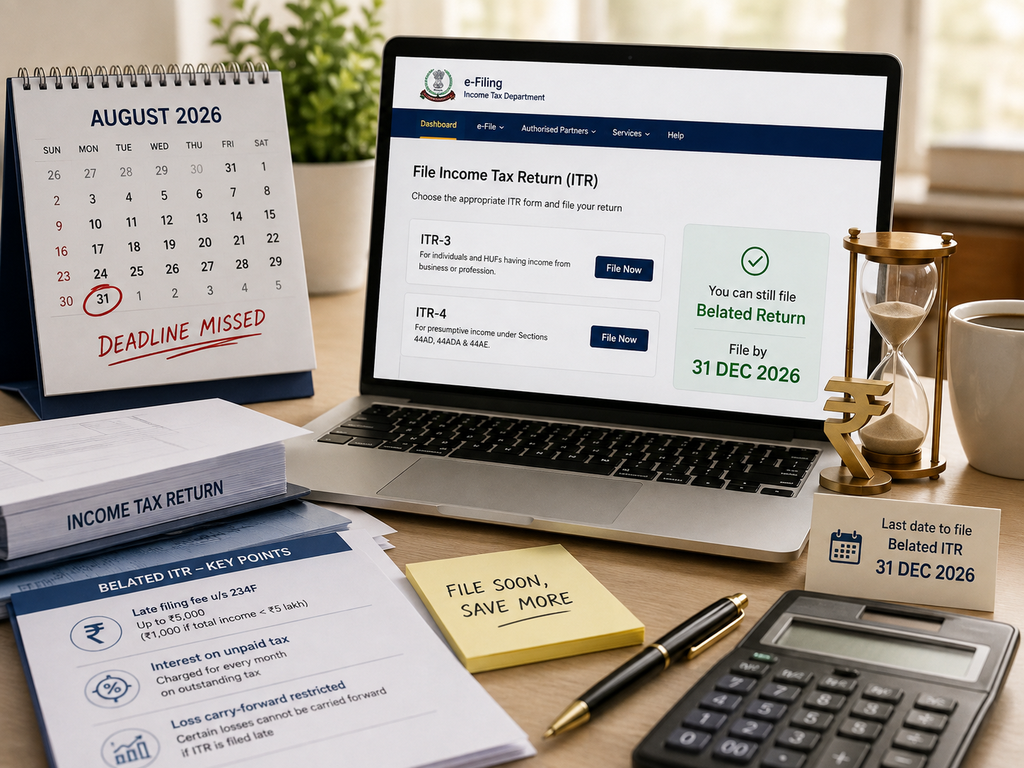
If you were supposed to file your Income Tax Return, ITR-3 or ITR-4, by August 31, 2026, and missed it, here’s the good news first. You haven’t lost your chance. This post walks you through what that deadline was about, what happens once you’ve missed it, and what you need to do next to stay on the right side of the taxman.
Due Date Timelines
July 31, 2026 was the due date for Individual taxpayers filling ITR-1 or ITR-2 and August 31, 2026 was the due date for non-audit taxpayers filing ITR-3 or ITR-4, which mainly covers freelancers, consultants, and small business owners, but if you were not able to file your return within time not to worry you still have option to file your return.
You Can Still File: The Belated Return
If you missed the August 31 cutoff, you can still file what’s called a belated ITR, and you have time until December 31, 2026 to do it, subject to the usual conditions.
A belated return works pretty much like a regular one in terms of the process. The real difference is the cost that comes attached to it.
What It Will Cost You
- Late filing fee under Section 234F
A belated ITR attracts a late filing fee of up to Rs 5,000. If your total income is below Rs 5 lakh, this fee is capped at Rs 1,000.
- Interest on unpaid tax
If you still owe any tax, interest keeps piling up on that outstanding amount for every month you delay filing. So the longer you sit on it, the more it ends up costing you.
- Loss carry-forward gets restricted
If you file late, you generally lose the ability to carry forward certain losses, like business losses or capital losses, to set off against income in future years. This is a benefit that’s usually reserved for taxpayers who file on time, and it’s one people often forget about until it actually hurts them.
What to Do Now
- File as soon as you can. Interest is calculated month by month, so the sooner you act, the less it adds up.
- Use the right ITR form. Non-audit taxpayers with business or professional income typically need ITR-3, ITR-4, depending on their category.
- Keep December 31, 2026 in mind. That’s your last window to file for this assessment year before things get more complicated.
- E-verify within 30 days of filing. This step gets missed a lot. Skipping it can push your actual filing date forward and trigger the same late-filing consequences even if you technically filed on time.
In Closing
Missing the August 31 deadline isn’t the end of the road, but it’s not something to sit on either. You still have until December 31, 2026 to file a belated return, so the option is there. What changes is the cost: a late fee that can go up to Rs 5,000, interest that adds up every single month you wait, and the loss of benefits like carrying forward certain losses. None of these get smaller with time, they only get bigger. So if you’ve missed the deadline, the best move is a simple one: stop putting it off and get your return filed. The sooner you do it, the less it’ll cost you in the end.